AI and the Future of Work: Reflections After Going on Dutch National Television
By Jessica Denkelaar · February 25, 2026
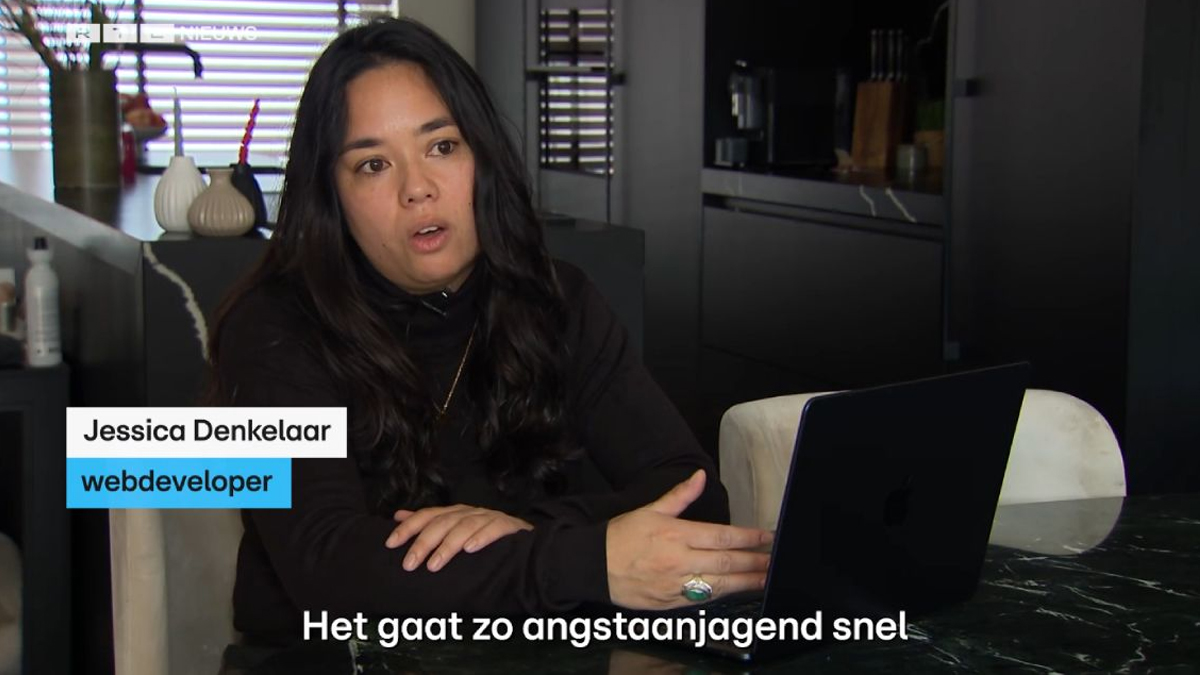
On the 25th of February I had the opportunity to appear on RTL4 nieuws (Dutch national television news) to discuss what artificial intelligence means for the future of work and the job market.
Here's what I said — and what I really think.
The Question Everyone Is Actually Asking
Whether it's framed as curiosity or fear, most people asking about AI and the job market are really asking one thing: Is my job safe?
It's a deeply human question, and it deserves a deeply honest answer.
My answer is this: AI won't replace most people — but it will absolutely change what most people do. And the distinction matters enormously.
We've been through technological changes before. I remember when I was a Flash programmer and all of a sudden Apple declared that Flash could no longer run on their devices. Well, there went my job. But it taught me something — everything I'd learned writing ActionScript I could adapt by learning another language. The knowledge didn't disappear, it transferred. And I think this new shift, everything becoming automated, is the same situation and the same question: "How can I use what I already know to become good at something new, like AI?"
AI is following that same arc that every wave of technology has followed. But it's moving faster, and it's touching more industries at once. That's what makes this moment feel different — not the direction, but the speed.
What I Worry About
Being honest on television means being willing to say the uncomfortable things too.
My honest worry isn't that AI will take everyone's job. My worry is simpler than that: if you're afraid of it, you'll fall behind. The people who treat AI as a threat and keep their distance are the ones who'll struggle. The people who dive in, experiment, break things, and figure out how it fits their work — they're the ones who'll come out ahead. It really is that straightforward.
But there's a deeper worry that keeps me up at night, and it's about my kids.
The education system was already behind on technology before AI arrived. Schools were still teaching skills for a job market that had moved on years ago. Now, with AI changing entire industries in real time, the curriculum gap is growing faster than anyone seems willing to admit. New jobs are being created right now — roles that didn't exist five years ago and aren't in any textbook. And yet most schools are still preparing children for a world that's already changing underneath them.
I want my children to graduate into a world where their education actually prepared them for it. That means schools need to start teaching AI literacy, critical thinking around AI outputs, and the kind of adaptability that lets you pivot when the technology shifts again — because it will shift again. The question isn't whether the job market will keep changing. It's whether we're raising a generation that knows how to change with it.
My Message to Everyone Who Is Afraid of AI Taking Their Job
If you're worried about where you fit as AI keeps getting more capable, here's what I told the RTL4 audience, and here's what I genuinely believe:
The people who thrive won't be the ones who fight AI. They'll be the ones who learn to work with it.
That doesn't mean you need to become an AI engineer. It means being curious about how AI tools apply to your field. It means using AI to do your current job better, faster, or with more depth — and then using the time you save to do the things only you can do.
It also means being willing to update your skills. Not because what you know is worthless, but because skills have always needed updating. The pace is just faster now. That's not a reason to panic. It's a reason to start today.
Going on national television was a reminder that the conversations happening in tech circles need to reach everyone — not just developers and founders and investors, but workers, job seekers, and students trying to figure out what their future looks like.
I'm glad to be part of that conversation. And I'm glad to be building tools that, I hope, make that future a little more fair.